Shelfari has merged with Goodreads. Take a look around and
let us know
if you have any questions or need any assistance.
Deciding what to read next?
You’re in the right place. Tell us what titles or genres you’ve enjoyed in the past, and we’ll give you surprisingly insightful recommendations.
What are your friends reading?
Chances are your friends are discussing their favorite
(and least favorite) books on Goodreads.
What will you discover?
She discovered:
Zombies, Post Apocalyptic, Dystopia, Urban Fantasy

She discovered:
Steam Punk, Science Fiction, Fantasy

Quotes

“Be yourself; everyone else is already taken.”
―
Oscar Wilde

“I'm selfish, impatient and a little insecure. I make mistakes, I am out of control and at times hard to handle. But if you can't handle me at my worst, then you sure as hell don't deserve me at my best.”
―
Marilyn Monroe

“So many books, so little time.”
―
Frank Zappa

“Two things are infinite: the universe and human stupidity; and I'm not sure about the universe.”
―
Albert Einstein

“A room without books is like a body without a soul.”
―
Marcus Tullius Cicero

“Be who you are and say what you feel, because those who mind don't matter, and those who matter don't mind.”
―
Bernard M. Baruch

“You've gotta dance like there's nobody watching,
Love like you'll never be hurt,
Sing like there's nobody listening,
And live like it's heaven on earth.”
―
William W. Purkey

“You know you're in love when you can't fall asleep because reality is finally better than your dreams.”
―
Dr. Seuss

“You only live once, but if you do it right, once is enough.”
―
Mae West

“Be the change that you wish to see in the world.”
―
Mahatma Gandhi

“In three words I can sum up everything I've learned about life: it goes on.”
―
Robert Frost

“Don’t walk in front of me… I may not follow
Don’t walk behind me… I may not lead
Walk beside me… just be my friend”
―
Albert Camus

“If you tell the truth, you don't have to remember anything.”
―
Mark Twain

“Friendship ... is born at the moment when one man says to another "What! You too? I thought that no one but myself . . .”
―
C.S. Lewis,
The Four Loves

“I've learned that people will forget what you said, people will forget what you did, but people will never forget how you made them feel.”
―
Maya Angelou

“A friend is someone who knows all about you and still loves you.”
―
Elbert Hubbard
“To live is the rarest thing in the world. Most people exist, that is all.”
―
Oscar Wilde
“Always forgive your enemies; nothing annoys them so much.”
―
Oscar Wilde
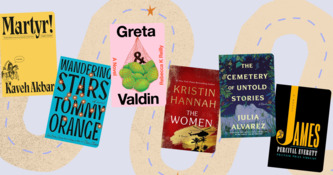
Goodreads Choice Awards: The Best Books
2023
Love lists?
7,826 books | 51,002 voters
12,420 books | 16,232 voters
7,021 books | 15,713 voters
More book lists
Are you an author or a publisher?
Gain access to a massive audience of book lovers.
Goodreads is a great place to promote your books.